Message from the CEO: ABA Member Updates | April 2026
Tuesday, April 07, 2026
I am very excited about our 2026 ABA Annual Meeting in Orlando. This is more than an opportunity to reconnect with colleagues and friends—or to meet new ones—it is also a moment to reflect on how far we have come over the past 12 months and the momentum we are building together as we look ahead as a community.
As I reviewed the key indicators in preparation for the Board of Trustees meeting, what stood out was the strength of the organization—reflected in part by steady membership growth and disciplined financial stewardship. While not everything can be captured in metrics alone, these indicators, along with the many intangible strengths of our community, position ABA to invest more intentionally in the areas that matter most to you: education, advocacy, data, research, and support for the burn care community.
Leadership Reflection
I encourage you to take a few minutes to listen to my recent conversation with Dr. Jeff Carter, ABA President (2025–2026) , as he reflects on this past year—what we have learned, where we have grown, and the path forward. His perspective reinforces the strength of our multidisciplinary community and the importance of staying aligned as we move ahead.
A Clear Advocacy North Star
ABA has engaged in advocacy efforts in the past, but we all recognize that the advocacy of yesterday is not the advocacy of today. Over the past year, we have intentionally paused, reassessed, and are now emerging with a more focused and strategic approach—our advocacy north star.
ABA is moving with greater intention into federal advocacy, ensuring that burn care is not overlooked, but recognized as essential to national preparedness, trauma systems, and long-term recovery.
This includes:
Establishing a sustained presence in Washington, DC
Engaging key federal agencies such as ASPR, BARDA, and the Department of Defense
Creating pathways for federal funding to support burn care infrastructure
In parallel, ABA is actively engaging in national policy efforts, including a sign-on letter to the Centers for Disease Control and Prevention (CDC) advocating for the formal recognition of burn injury sequelae as a chronic health condition. This effort reflects the evolving understanding that burn care extends well beyond the acute phase and requires long-term support, resources, and policy alignment. You can add your burn center to the sign-on letter.
To learn more about this important advocacy effort and how it supports the future of burn care, we encourage you to stop by the ABA booth during the Annual Meeting in Orlando.
This is not theoretical work. It is about ensuring that ABA’s burn care is funded, supported, and sustainable at a national level, while also strengthening our role in disaster preparedness, coordinated response, and training across the burn care system.
Data as Infrastructure: BCQP and Beyond
The Burn Care Quality Platform (BCQP) is the data backbone of our specialty.
This matters because:
Data defines how we demonstrate value
Data drives research and policy
Data strengthens the case for resources and support
Through BCQP and our growing partnership with BData, ABA is beginning to move beyond traditional reporting toward predictive, system-level approaches that can actively shape access to burn care. Implementation of the BCQP represents a meaningful shift from simply collecting data to actively improving care—empowering burn centers to better track outcomes, identify opportunities for improvement, and drive meaningful change in patient care. It highlights the potential of BCQP to not only inform practice, but to elevate the standard of care across the burn community. If you have time, see April 2025 JBCR article on “978 lessons learned: independent utilization of the burn care quality platform(BCQP).

This was brought to life through the ABA–BData Burn Care Heat Map Hackathon , culminating in a formal Awards Ceremony hosted in partnership with HealthcareMN, the University of Minnesota, and BData. The event marked the conclusion of a month-long collaboration bringing together data scientists, clinicians, and innovators focused on a shared challenge: improving equitable access to burn care across the United States.
Participants utilized real-world datasets, including BData’s National Injury Resource Database (NIRD), to:
Identify geographic and system-level gaps in burn care access
Model more equitable burn center distribution and referral pathways
Explore solutions to improve timely access to life-saving care
The Awards Ceremony highlighted the top-performing teams and most impactful analytical insights, showcasing how data-driven approaches can inform real-world decision-making in healthcare delivery. Beyond the competition, the event brought together leaders across clinical care, data science, academia, and industry, reinforcing the multidisciplinary collaboration that defines burn care. See side-bar summary from Professor Pinar Karaca-Mandic from this event.
This work signals a broader shift for ABA, from reporting what has happened to helping define what should happen next in burn care delivery.
The insights generated through this effort will not sit on a shelf, they represent the beginning of how ABA can leverage data to shape the future of burn care access in the United States.
It is an early but meaningful step toward using data not only to measure care, but to guide decision-making, inform policy, and improve outcomes for patients across the country.
Education at Scale: A New Model
ABA is evolving from episodic education to a continuous learning ecosystem:
ABLS is being modernized, including exploration of AI-enabled delivery
The Virtual Masterclass Series expands access to high-level education across the burn team
The Burn Surgeon Forum (BSF) is growing with earlier registration and strong industry support
Importantly, we are now promoting and building these programs earlier in the year—
intentionally strengthening second-half revenue and expanding access to education.
Advancing the Science: JBCR and Abstracts
The Journal of Burn Care & Research (JBCR) and the scientific abstracts presented at the Annual Meeting represent the collective advancement of our field.
This is where:
Innovation is shared
Practice is refined
The future of burn care is shaped
The latest Journal of Burn Care & Research (JBCR) highlights the continued advancement of burn care across clinical practice, research, and long-term outcomes. Key themes include innovations in wound healing and skin regeneration technologies, such as autologous skin cell suspension and enzymatic debridement, alongside emerging research aimed at improving healing and reducing burn progression. The issue also underscores the importance of pain management and opioid stewardship, including strategies to reduce postoperative opioid use, as well as critical insights into health disparities, particularly in long-term prescribing patterns following burn injury. Beyond acute care, several studies emphasize the evolving focus on long-term outcomes and survivorship, including mental health support, patient-reported experiences, and lessons learned from historical events such as 9/11. Collectively, these articles reflect a field that is not only advancing technically, but also becoming more holistic, integrating clinical innovation, equity, and long-term patient-centered care to improve outcomes for burn survivors.
Reimbursement: Protecting the Future of Burn Care
ABA is advancing a more proactive and strategic approach to CPT coding and reimbursement, recognizing that the long-term sustainability of burn care depends on accurately reflecting the complexity and continuum of care provided to patients.
This work includes targeted investment in CPT code development and advancement, including efforts to move emerging technologies and procedures from Category III to Category I status. This is a rigorous, multi-step process requiring clinical evidence, BCQP data utilization, physician surveys, national advocacy, and broad education across providers and payers.
Importantly, this is not simply a coding exercise, it is foundational to ensuring that:
Burn care is appropriately valued within the healthcare system
Burn centers remain financially sustainable
Innovation in care delivery can continue to advance
Collectively, these efforts represent a shift from reactive coding support to a more strategic, data-informed, and policy-aligned approach to reimbursement, one that is essential to the future of burn care.
This work is especially important as Medicare and Medicaid reimbursement models continue to evolve, placing increased pressure on hospitals, burn centers, and care teams to demonstrate value, efficiency, and outcomes. Burn care is uniquely complex and resource-intensive, and without appropriate recognition in reimbursement structures, there is risk to the sustainability of burn programs and the teams that support them.
ABA’s efforts are focused on ensuring that reimbursement models more accurately reflect the realities of burn care, supporting not only the financial viability of burn centers, but also the staffing, resources, and infrastructure required to deliver high-quality care now and into the future.
As ABA increases its engagement at the national level, including with the American Medical Association (AMA) and its delegate structure, it is critical that we hear from our ABA members. If you are involved with the AMA, or interested in participating in these efforts, we encourage you to connect with us. Your input will help shape how ABA represents and advances burn care nationally.
To learn more about these efforts and our broader advocacy work, we encourage you to visit the ABA booth during the Annual Meeting for additional information and discussion.
Strengthening the Organization Behind the Work
To support all of this, ABA has undertaken staff realignment and operational improvements, ensuring that:
Programs will be better coordinated
Member needs will be more effectively supported
The organization can be better positioned for long-term growth
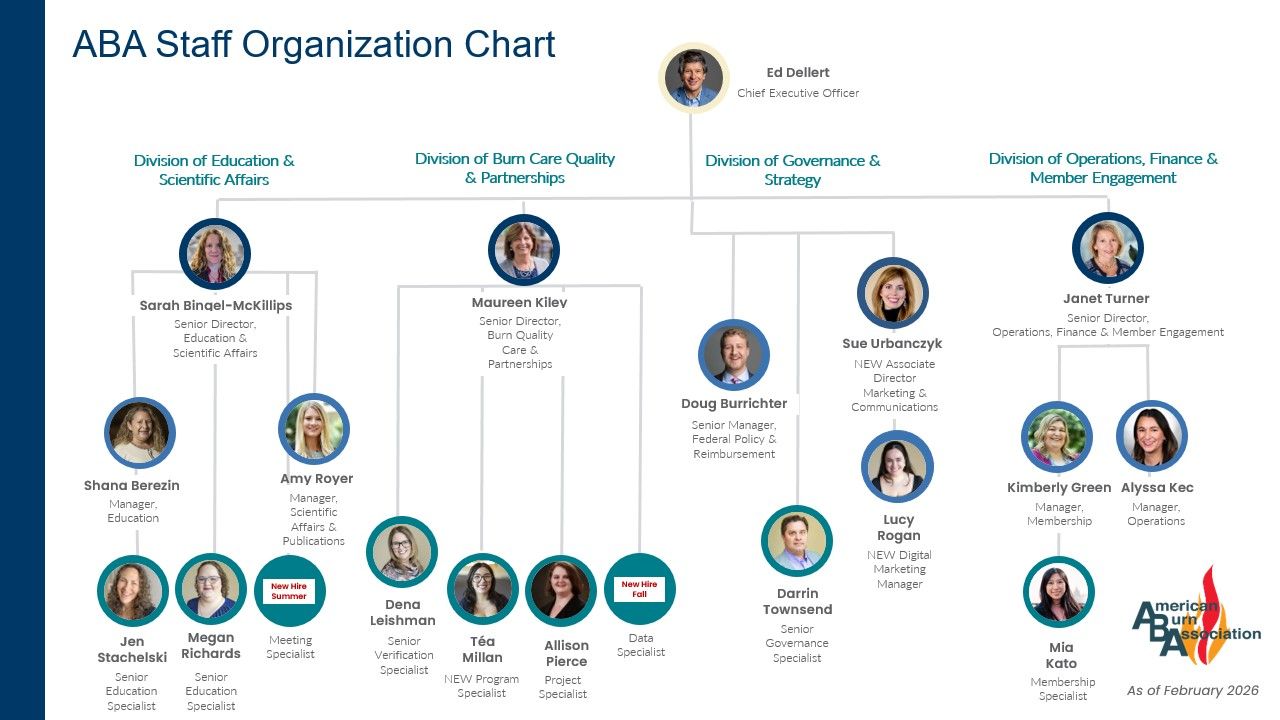
We are also increasing transparency and alignment with committees, creating stronger connections between leadership, staff, and membership.
Investing in the Future of ABA
ABA is currently conducting a fundraising feasibility study, including interviews taking place during the Annual Meeting.
This effort is exploring:
A potential multi-million-dollar campaign
The potential for a future foundation model
A possible vehicle to support strategic operational initiatives
The goal: To establish a sustainable funding platform that supports member development and advances the mission of the ABA, through initiatives such as a Young Investigators Fund, while ensuring the organization has the structure and resources to support burn care research and mission-driven programs long-term.
Strong Momentum Heading into Orlando
The 2026 Annual Meeting is trending toward a record-setting gathering at the time of this report’s writing, with strong registration, sponsorship, and engagement.
Regardless of the final participation numbers, what matters most is what this meeting represents:
A community coming together
A shared commitment to patients and survivors
A moment to shape what comes next
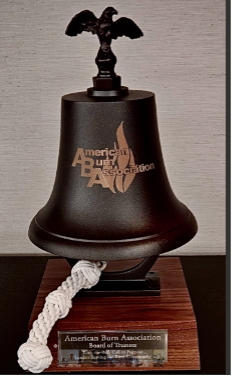
This will be powerfully reflected in the unveiling of the ABA Bell, which will serve as a reminder of why we do this work, connecting our individual efforts to a broader impact across science, systems, and strategy, and ultimately to the lived experiences of our patients.
Appreciation and Recognition
To our industry partners, thank you for your continued support through sponsorship and engagement. We are equally grateful to our strategic partners who help extend ABA’s reach and impact.
Congratulations to:
Our FABA inductees
Newly certified and future CBRNs
And our ABA awardees, who represent the very best of our field
Final Thought
The progress we are seeing is not incremental; it reflects a deliberate shift in how ABA operates, engages, and leads, guided by the priorities outlined in our strategic plan and organizational values.
Burn care is not defined by any one discipline.
It is defined by a team.
And what we are building together is not just an organization—
it is the future of burn care, grounded in a shared commitment to collaboration, innovation, and excellence.
To learn more about ABA’s strategic direction and values, we encourage you to visit:
https://www.ameriburn.org/about/organization-values
We look forward to seeing you in Orlando.
Ed Dellert, RN, MBA, CAE, FACEHP
Chief Executive Officer
American Burn Association